 Oklahoma Senate
Great Western Cattle Trail 1890's
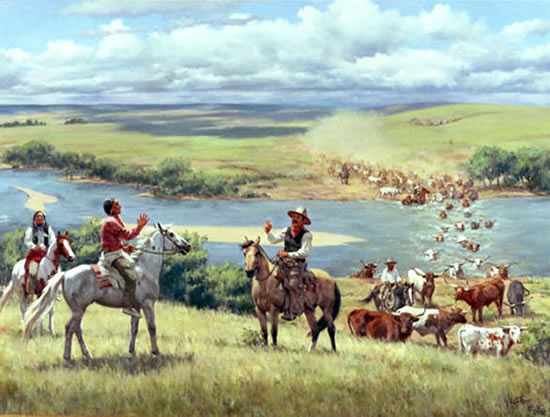
Artist: Barbara Vaupel
Sponsor: Sen. Robert M. Kerr
Dedication: February 9, 2000
Size: 40" x 30"
Type: Oil on Canvas
Location: Outer Senate Chamber
Following the Civil War, Texas found itself with many long horned cattle, but no markets. The demand for beef in the Northeast was high. As the railhead in Kansas moved further west, four major trails developed from south to north. The last one formed was the Great Western. It entered Oklahoma at Doan's Crossing south of Altus and exited Oklahoma at the Kansas border northwest of Buffalo, going on to Dodge City, Kansas. The painting depicts cattle crossing the Canadian River near Camargo in Dewey County. John Lytle blazed this new trail in 1874, and through the 1880's and 1890's, over 300,000 head of cattle, 7,000 horses and over 1,000 men moved north on the Great Western each year. Since the Indian tribes, Apaches, Kiowas and Comanches, as depicted, had their major source of food, the buffalo, depleted, it became important that they live on the cattle going north. It was common to negotiate the number of beeves for the privilege of crossing their lands and grazing on their grasses. As the railroad developed through Texas and Oklahoma these cattle trails soon became unnecessary.
Images are copyright of The Oklahoma State Senate Historical Preservation Fund, Inc. and the artist. Please contact Matt Duehning at 405-524-0126 or Matt.Duehning@oksenate.gov for further copyright information.
