 Oklahoma Senate
Fort Smith Conference - 1865
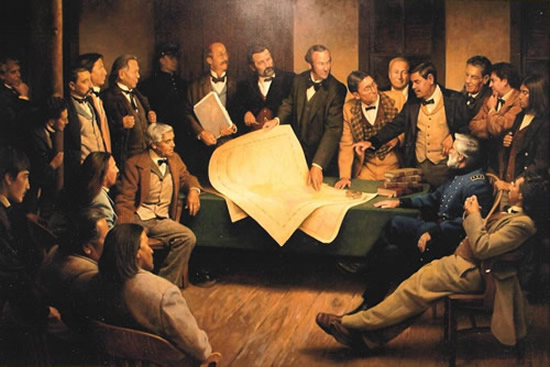
Artist: Mike Wimmer
Sponsor: Lilah B. Marshall & Paula Marshall
Dedication: February 28, 2006
Size: 90" x 56"
Type: Oil on Canvas
Location: 4th Floor, Outside Senate Lobby
The Fort Smith Council was convened at the Fort Smith military post on September 8, 1865, to renegotiate treaties between the United States and the tribes who aligned with the Confederacy during the Civil War.
Tribes represented were the Cherokee, Chickasaw, Choctaw, Comanche, Creek, Osage, Quapaw, Seminole, Seneca, Shawnee, Wichita and Wyandotte. Among the representatives on the part of the United States were D. N. Cooley, Commissioner of Indian Affairs, Elijah Sells, Superintendent of Indian Affairs; and Colonel E. S. Parker.
Tribes were informed that those who had entered into treaties with the late Confederate government had forfeited all of their rights and protection from the Government of the United States and that their property was subject to confiscation. The Government indicated that certain conditions would need to be met before renegotiating, including the abolishment of slavery.
Another important proposal put forth for consideration was the joining together of all the tribes in the Indian Territory into one commonwealth government.
It was at this time when Allen Wright, Principal Chief of the Choctaws, proposed the word “Oklahoma” for consideration as the name to be given to a common government. The name was taken from two Choctaw words meaning “Land of the Red Man.”
The tribes objected to the peace terms presented and after an unproductive session of thirteen days, the Fort Smith Council adjourned to meet at Washington the next year. Before the closing, however, a simple treaty of peace was negotiated with the tribes restoring allegiance to the United States.
The Fort Smith Council is claimed by the Indian Office not to be a treaty, but simply an agreement which formed the basis for later treaties, such as the Seminole Treaty of May 21, 1866 and the treaty with the Creeks on June 14, 1866.
Images are copyright of The Oklahoma State Senate Historical Preservation Fund, Inc. and the artist. Please contact Matt Duehning at 405-524-0126 or Matt.Duehning@oksenate.gov for further copyright information.

