 Oklahoma Senate
Analysis of Crime and Conviction Data
Senate Appropriations Subcommittee on Public Safety & Judiciary
April 11, 2001
Prison Population Trends
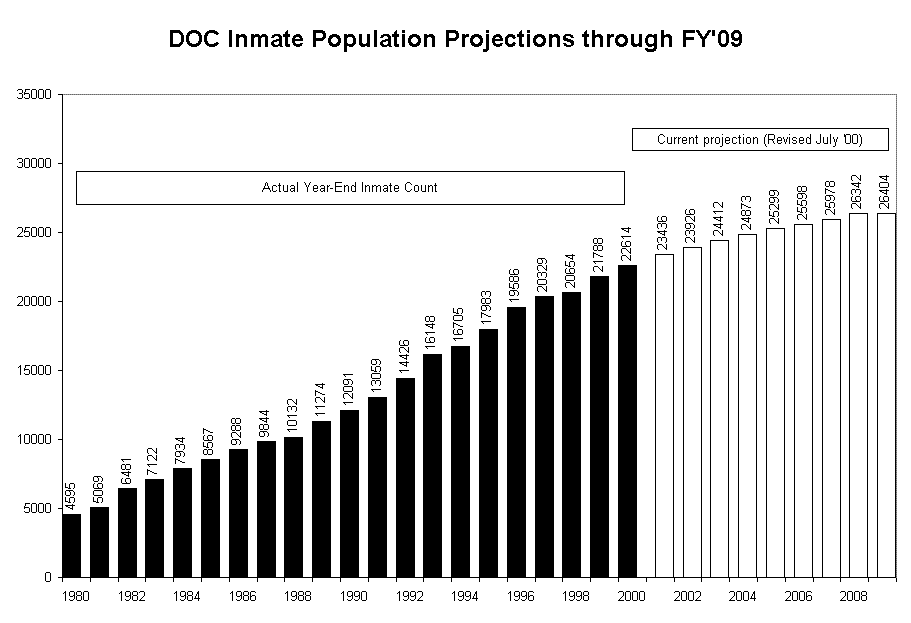
1. DOC Inmate Population Projections through FY'09
Crimes and Convictions
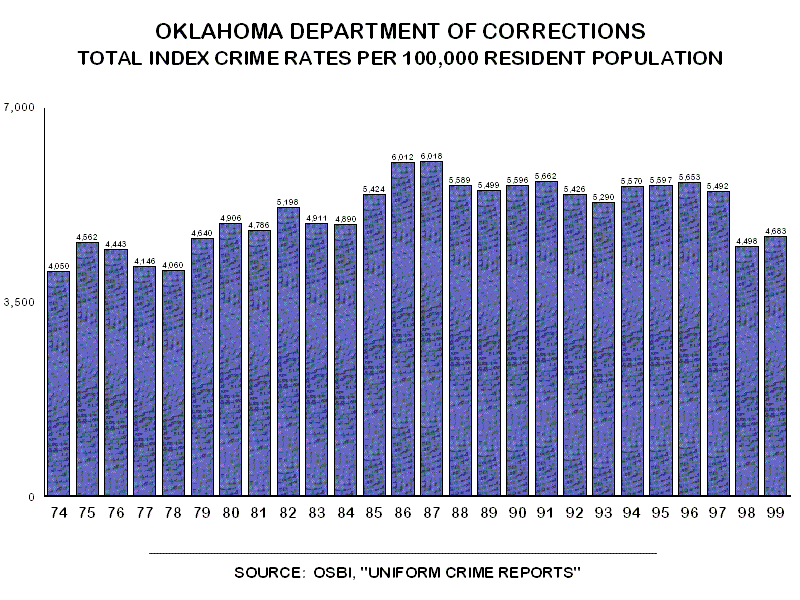
2. Index Crime Rate Trend
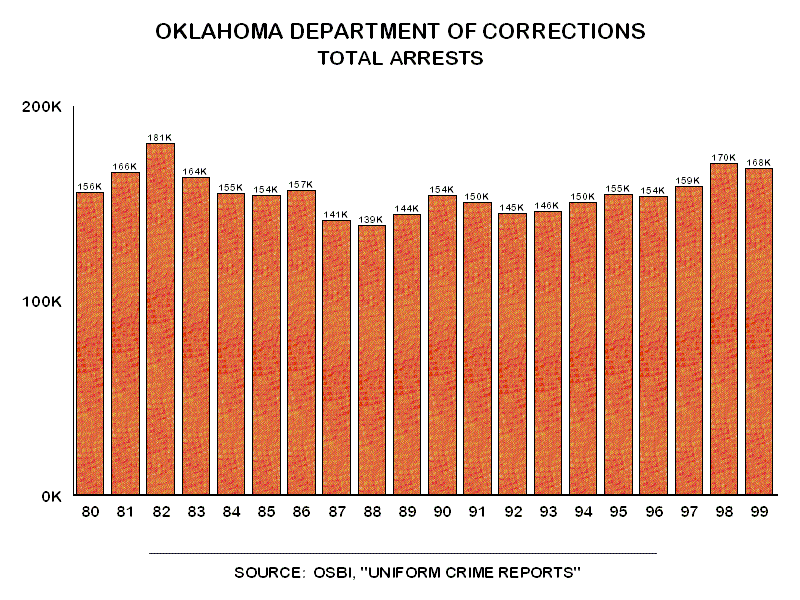
3. Total Arrests Trend
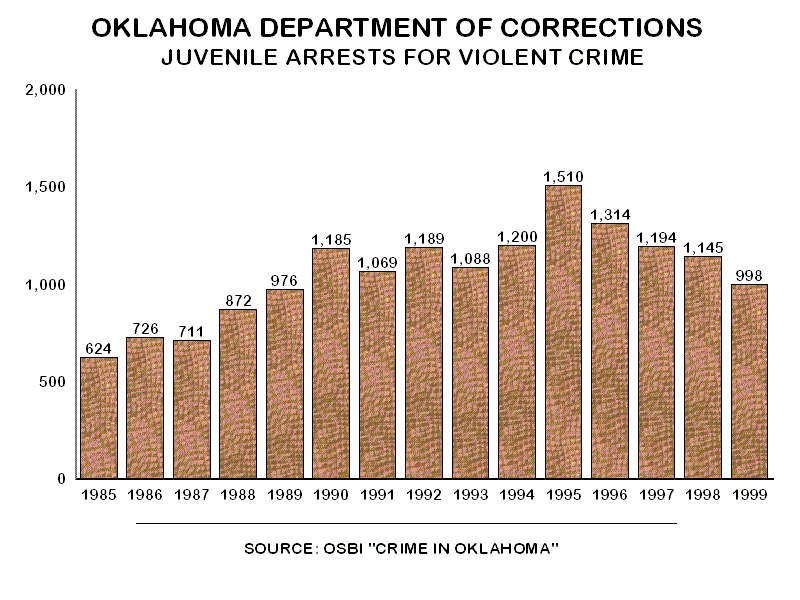
4. Juvenile Arrests for Violent Crimes Trend
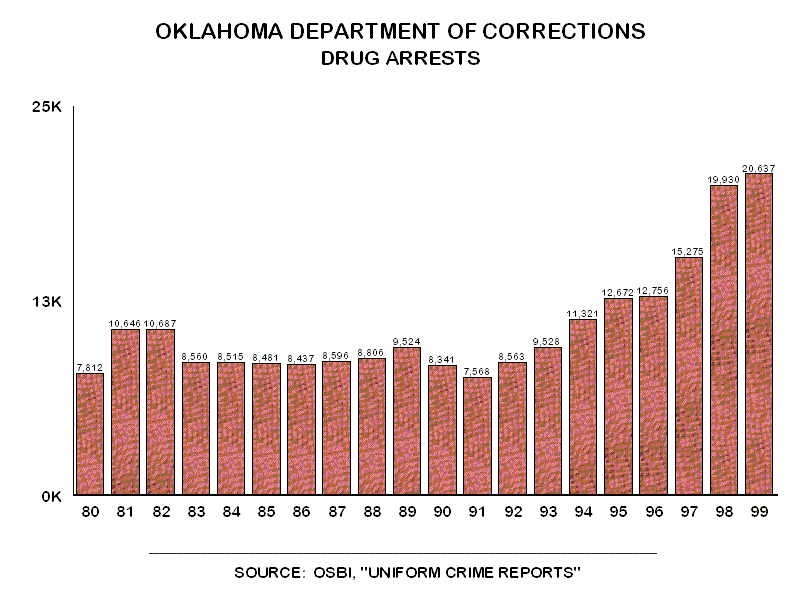
5. Drug Arrests Trend
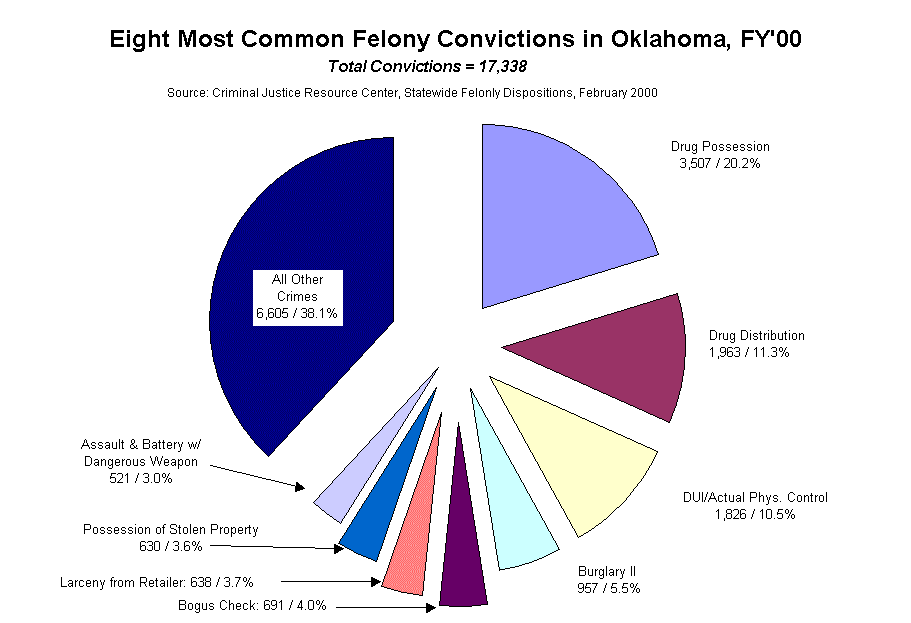
6. Eight Most Common Felony Convictions
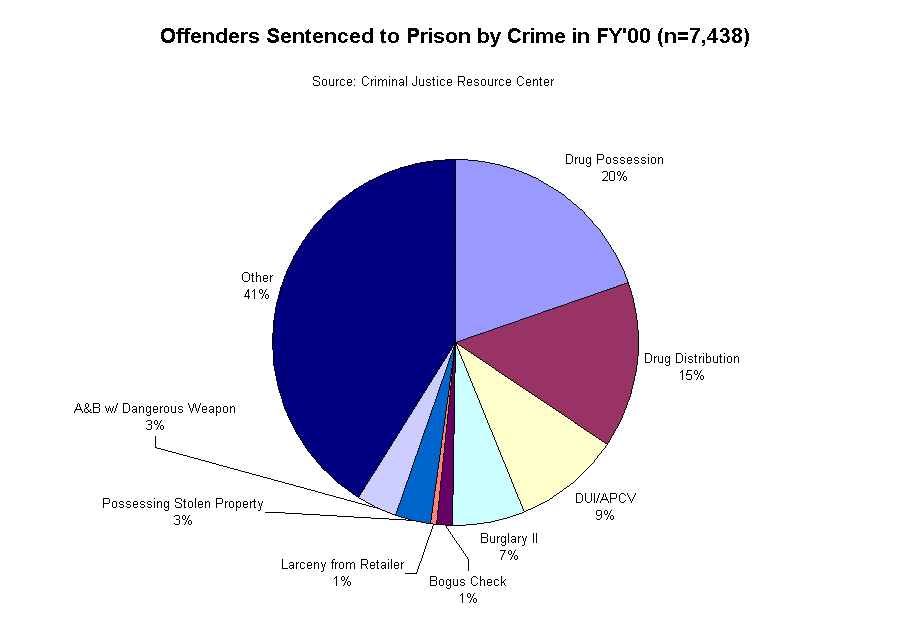
7. Offenders Sentenced to Prison by Crime
8. Comparison of Convictions vs. Prison Receptions by Crime Type
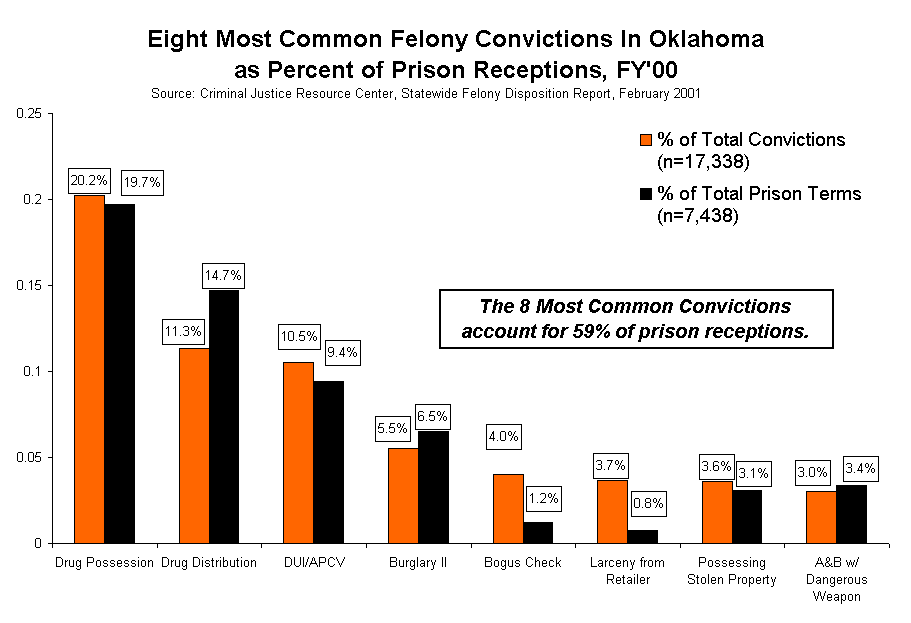
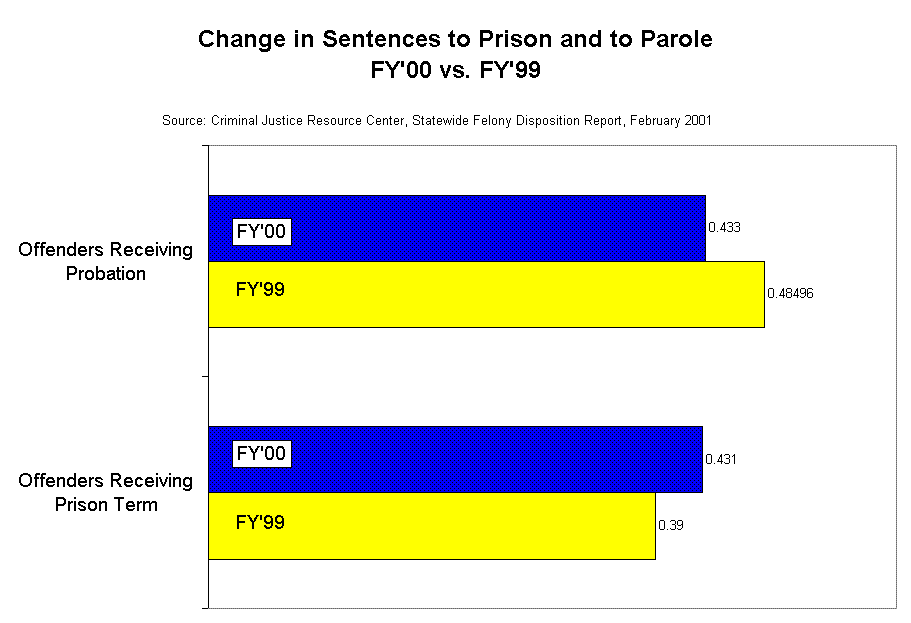
9. Change in Sentences to Prison and to Parole, FY'00 vs. FY'99
10. Average Sentence Length and Time Served, Oklahoma vs. U.S.
| Crime Type | U.S. Avg Prison Sentence in Years | OK Avg Prison Sentence in Years | U.S. Avg % of Sentence Served | OK Avg % of Sentence Served | U.S. Avg Time Served in Years | OK Avg Time Served in Years | OK Time Served as % of U.S. |
|---|---|---|---|---|---|---|---|
| Rape | 13.2 | 22.9 | 55% | 45% | 7.3 | 10.3 | 142% |
| Robbery | 9.7 | 21.5 | 46% | 49% | 4.5 | 10.5 | 236% |
| Agg. Assault | 6.6 | 12.2 | 49% | 51% | 3.2 | 6.2 | 192% |
| Burglary | 5.8 | 14.2 | 39% | 42% | 2.3 | 6.0 | 264% |
| Drug Possession | 4.2 | 7.4 | 32% | 40% | 1.3 | 3.0 | 220% |
| Drug Trafficking | 5.5 | 16.4 | 38% | 35% | 2.1 | 5.7 | 275% |
Sources:
U.S. data from Crime and Justice Atlas, U.S. Department of Justice, June 1998
Oklahoma data from DOC Summary of Statistics of Inmate Population, 12/21/00, and
DOC Summary of Time Served Statistics for Prison Releases in 1999, report date 2/4/00
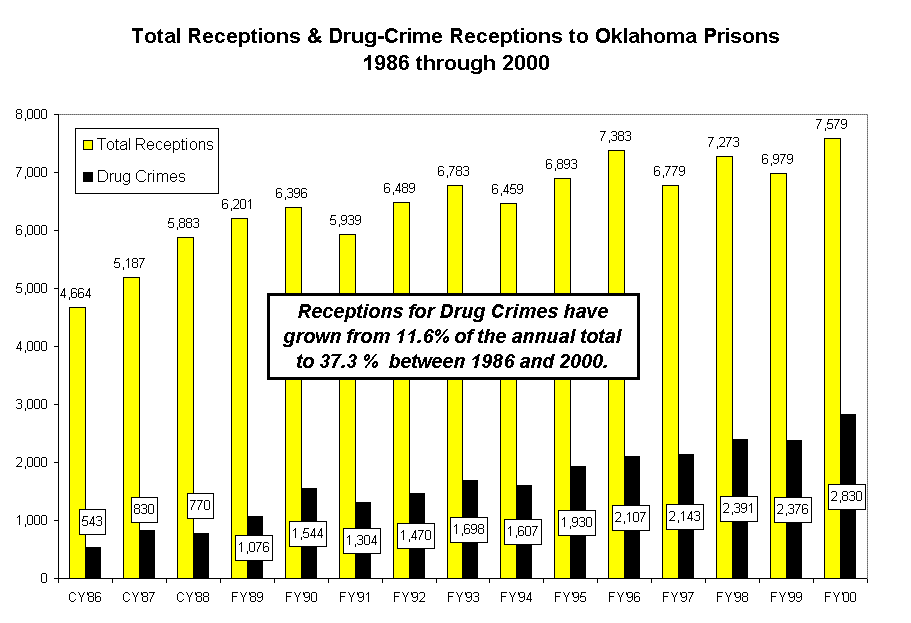
11. Total Receptions and Drug Crime Receptions, 1986 through 2000
12. Drug Possession Offenders Sent to Prison, by County
Drug Possession Offenders Sent to Prison
By County, FY'00
Source: Criminal Justice Resource Center, Statewide Felony Disposition Report, February 2001
| County | Total Drug Possession Convictions | Drug Possession Convictions Sent to Prison | % of Total Drug Possession Convictions Sent to Prison |
|---|---|---|---|
| Adair | 4 | 1 | 25% |
| Alfalfa | 2 | 0 | 0% |
| Atoka | 19 | 6 | 32% |
| Beaver | 2 | 0 | 0% |
| Beckham | 13 | 2 | 15% |
| Blaine | 4 | 1 | 25% |
| Bryan | 56 | 9 | 16% |
| Caddo | 19 | 8 | 42% |
| Canadian | 26 | 9 | 35% |
| Carter | 35 | 22 | 63% |
| Cherokee | 14 | 2 | 14% |
| Choctaw | 22 | 4 | 18% |
| Cimarron | 2 | 1 | 50% |
| Cleveland | 50 | 14 | 28% |
| Coal | 21 | 7 | 33% |
| Comanche | 89 | 63 | 71% |
| Cotton | 3 | 1 | 33% |
| Craig | 17 | 5 | 29% |
| Creek | 26 | 15 | 58% |
| Custer | 14 | 5 | 36% |
| Delaware | 27 | 3 | 11% |
| Dewey | 2 | 0 | 0% |
| Ellis | 2 | 0 | 0% |
| Garfield | 42 | 13 | 31% |
| Garvin | 48 | 5 | 10% |
| Grady | 24 | 9 | 38% |
| Grant | 0 | n/a | |
| Greer | 8 | 0 | 0% |
| Harmon | 0 | n/a | |
| Harper | 1 | 0 | 0% |
| Haskell | 13 | 1 | 8% |
| Hughes | 8 | 3 | 38% |
| Jackson | 12 | 2 | 17% |
| Jefferson | 8 | 3 | 38% |
| Johnston | 9 | 6 | 67% |
| Kay | 13 | 6 | 46% |
| Kingfisher | 3 | 3 | 100% |
| Kiowa | 4 | 2 | 50% |
| Latimer | 4 | 0 | 0% |
| LeFlore | 35 | 15 | 43% |
| Lincoln | 28 | 11 | 39% |
| Logan | 36 | 16 | 44% |
| Love | 15 | 4 | 27% |
| Major | 3 | 0 | 0% |
| Marshall | 17 | 3 | 18% |
| Mayes | 46 | 6 | 13% |
| McClain | 15 | 5 | 33% |
| McCurtain | 33 | 13 | 39% |
| McIntosh | 26 | 11 | 42% |
| Murray | 11 | 4 | 36% |
| Muskogee | 94 | 23 | 24% |
| Noble | 0 | n/a | |
| Nowata | 2 | 1 | 50% |
| Okfuskee | 13 | 8 | 62% |
| Oklahoma | 1018 | 511 | 50% |
| Okmulgee | 31 | 12 | 39% |
| Osage | 33 | 14 | 42% |
| Ottawa | 18 | 3 | 17% |
| Pawnee | 9 | 8 | 89% |
| Payne | 67 | 20 | 30% |
| Pittsburg | 48 | 13 | 27% |
| Pontotoc | 45 | 20 | 44% |
| Pottawatomie | 60 | 28 | 47% |
| Pushmataha | 11 | 1 | 9% |
| Roger Mills | 2 | 0 | 0% |
| Rogers | 61 | 21 | 34% |
| Seminole | 29 | 7 | 24% |
| Sequoyah | 99 | 17 | 17% |
| Stephens | 48 | 28 | 58% |
| Texas | 23 | 3 | 13% |
| Tillman | 5 | 2 | 40% |
| Tulsa | 802 | 417 | 52% |
| Wagoner | 30 | 7 | 23% |
| Washington | 14 | 8 | 57% |
| Washita | 5 | 1 | 20% |
| Woods | 0 | n/a | |
| Woodward | 7 | 0 | 0% |
| State Total | 3,505 | 1,492 | 42.6% |
Source: Criminal Justice Resource Center, Statewide Felony Dispositions Report for FY'00
13. Comparison of "1st Time, Non-violent Prisoners"
| Department of Corrections | Criminal Justice Resource Center | ||||
|---|---|---|---|---|---|
| No. | Analysis | Number | No. | Analysis | Number |
| 1. | Population considered: inmates in prison | 21,000 | 1. | Population considered: inmate receptions in FY'99 | 6,599 |
| 2. | Initial Query of Computer Records: 1st-time in prison, non-violent controlling offense, excluding drug trafficking & manufacturing and multiple judgement/sentence dates. | 1,741 | 2. | Initial Query of Computer Records: All prisoners received, whether convicted of a violent or non-violent offense, whose court records showed no prior offenses. | 2,069 |
| 3. | Additional qualifier: review each inmate's "jacket" to detect prior juvenile offenses; prior convictions not reflected in the mainframe (no limit in years passed); and out-of-state convictions. | 740 | 3. | Additional qualifier: Exclude offenders convicted of a violent offense, drug trafficking or drug manufacturing; and those with multiple judgement/sentence dates. Note: CJRC cannot access juvenile records. CJRC tracks out-of-state prior convictions only if they are entered into court records, or if DOC forwards RAP sheet. | 1,209 |
| District Attorney's Council Review of DOC records | |||||
| 4. | Population Considered: case-by-case review by DA offices of 631 of the 740 DOC "1st-timers". | 740 | 4. | CJRC database on prison receptions was queried to apply to reception data the criteria deemed by DA analysis to be non-qualifying. | 1,209 |
| 5. | Additional qualifier: Private DA records showed prior convictions on 142 of the 740 (e.g., DA deferred sentences). | 489 | 5. | There are no public records that can verify DA deferred prosecutions. | n/a |
| 6. | Additional qualifier: 133 of the 740 had been sentenced to a prison-based program such as RID/FORT, which the DAs consider "alternative sentencing." | 356 | 6. | Exclude 362 prison receptions to RID/FORT, which are shock-incarceration programs. Because they are short-term programs, annual receptions exceed capacity. | 847 |
| 7. | Additional qualifier: 31 of the 740 were sent to prison as a result of a blind plea or jury trial (DA did not negotiate a prison term as a plea agreement) | 325 | 7. | Exclude 16 prison receptions that were the result of a blind plea or a jury trial. | 831 |
| 8. | Additional qualifier: 212 of the 740 were incarcerated on drug charges (67 for dealing or manufacturing, 82 for multiple drug charges, 63 for single drug charges). | 113 | 8. | Exclude 319 other drug offenders whose charges were not related to trafficking/manufacturing. This includes possession, distribution, cultivation, etc. | 512 |
| 9. | Additional qualifier: 54 of the 704 were charged with multiple non-drug counts, whether or not they were convicted on multiple counts. | 59 | 9. | CJRC methodology does not capture information on initial charges; only charges that result in conviction are entered. | n/a |
| 10. | Exclude 226 revoked sentences (the DOC and DA analyses of prison population exclude revokes as 1st-timers). | 286 | |||
14. Discussion of Issues: Defining "1st-Time Non-Violent Offender"
Resolving Differences in Defining "1st-Time, Non-violent Offender"
1. Records of prior offenses, especially juvenile and out-of-state, are not always entered into records by law (juvenile) or by practice ("dropping page 2").
Should juvenile crimes -- not adjudicated in an adversarial court process -- be considered prior offenses, even if they are non-violent?
How old must a prior adult conviction be before an offender should be considered for an alternative sentence?
2. DA deferred prosecutions: DOC and CJRC cannot access private files of prosecutors.
Should a crime which the DA decided not worthy of punishment be considered a prior offense?
If deferred prosecution (no official record) is the first step, shouldn't deferred sentence (official record, ultimately deleted) and suspended sentence (permanent record) be subsequent steps before imprisonment?
3. Drug crimes: Define a threshold above which imprisonment is a proper level of punishment.
1st-time drug possession crimes?
Subsequent drug possession crimes? How many?
First-time drug dealing?
First-time cultivation?
Trafficking/manufacturing?
4. Multiple Counts / Multiple Convictions
Should an offender charged/convicted of multiple crimes, stemming from one incident, be considered a 1st-timer, for purposes of determining whether imprisonment is proper?
Community Sentencing Summary
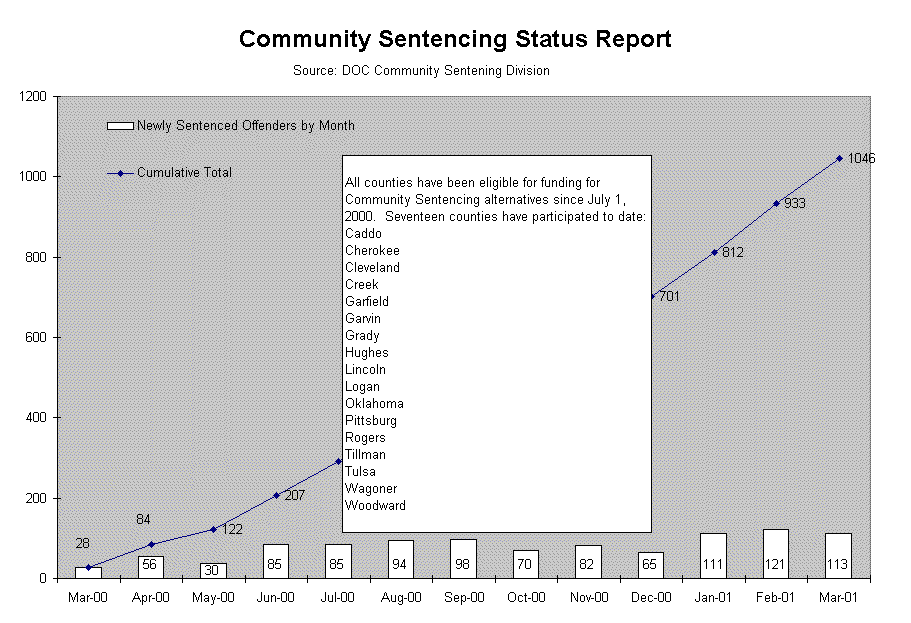
15. Community Sentencing Status Report
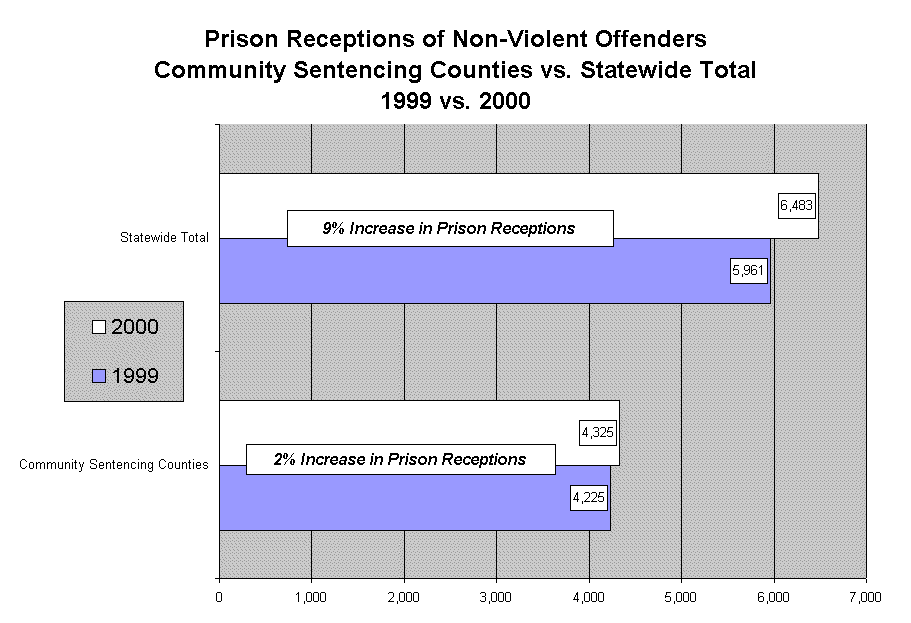
16. Prison Receptions from Community Sentencing Counties