In order to provide equal access and equal opportunity to people with diverse abilities, this site has been designed with accessibility in mind. Click here to view
 Oklahoma Senate
Bill establishing Medical Foster Homes for disabled veterans signed into law
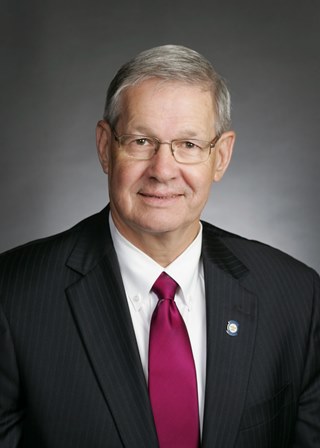 Sen. Frank Simpson
Governor Fallin signed legislation into law recently to help disabled veterans get the treatment and help they need without going to a nursing home. Senate Bill 1210, by Sen. Frank Simpson and Rep. Tommy Hardin, creates the Oklahoma Medical Foster Home Act providing non-institutional community-based care for aging and/or chronically/terminally-ill veterans who are unable to live independently and do not have a caregiver who is able to manage their medical, emotional and/or psychosocial needs.
“Many returning soldiers have survived devastating injuries thanks to dramatic advances in medical technology, which is good but many have been left with serious disabilities,” said Simpson, R-Ardmore. “Those who can’t live independently and don’t have the family support or can’t afford home care are typically forced to live in nursing homes, which isn’t a good environment for veterans, especially younger ones returning from Iraq and Afghanistan. Medical Foster Homes have proven successful nationwide in helping address the special emotional and physical needs of disabled veterans. They offer an alternative to a growing population of veterans who deserve our gratitude, support and care.”
Under SB 1210, the Oklahoma Medical Foster Homes would be operated in conjunction with the Veterans Administration’s Medical Foster Homes (MFH), which provides an alternative to nursing homes by recruiting caregivers who provide 24/7 care and supervision in a private residence in the community.
“The medical foster homes provide the highest quality of life possible for these heroes. It’s an opportunity for disabled veterans to live in a comfortable, family home environment with other veterans, which has been found to play an important role in their emotional recovery,” said Hardin, R-Madill. “Oklahoma is a great state for veterans and my hope is that we will continue to look out for our returning heroes. This law will allow our veterans to be treated with the dignity and respect they deserve.”
The program is limited to no more than three veterans per home and homes must be enrolled in the VA Home Based Primary Care (HBPC) program. Caregivers will be screened and trained by the VA. The HBPC provides interdisciplinary health care teams to provide medical and psychological care with the goal of minimizing hospitalization or institutionalization. The HBPC will make regular home visits and will provide ongoing education for the veteran and caregiver.
Government Relations Director for the Mid-America Chapter Paralyzed Veterans of America Scott Ellis thanked the Governor and legislators for getting the bill signed into law saying it would be greatly beneficial to Oklahoma veterans.
“The Mid-America Chapter of Paralyzed Veterans of America is so pleased to see this legislation signed into law. It will allow those disabled veterans that wish to have a place to live other than a nursing home relocate and live in a community,” said Ellis. “We’d like to thank Governor Fallin for her long-time support of veterans. She has shown time and time again that she is a friend of the military and veterans. We’d also like to thank Senator Simpson and Representative Hardin for authoring and being the driving force behind this bill as well as thank Senator Steve Russell and Representative Paul Wesselhoft for their strong support. This is just another example of how Oklahoma Republicans and Democrats have come together for the betterment of Oklahoma veterans.”
“Support at Home - Where Heroes Meet Angels" has become the slogan for the National Medical Foster Home (MFH) initiative. According to Jennifer May, LCSW, a Geriatrics and Extended Care Social Worker for the Oklahoma City VA Medical Center, the Medical Foster Home program has been developed at 62 VA Medical Centers in 35 states since its creation in 2000.
“Medical Foster Homes have been established in several states with great success. Nearly 1,100 veterans having chosen this option over nursing home care and have been highly satisfied with the program and their treatment,” said May. “We’re pleased that Oklahoma veterans will now have the freedom to choose this alternative to standard institutional care options.”
The fee for services/care will be negotiated and agreed upon in writing between the caregiver and the veteran. These fees will range from $1,300 to $2,500+/month depending on Care Level and will be paid by the veteran directly to the caregiver. The MFH Coordinator will assist the veteran in maximizing federal benefits to help with financial resources. Medicaid funding is not used for this program.

