In order to provide equal access and equal opportunity to people with diverse abilities, this site has been designed with accessibility in mind. Click here to view
 Oklahoma Senate
Sen. Rice Files Bill to Protect Health of Minors
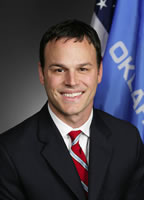 Sen. Andrew Rice
One in five Americans will get skin cancer in their lifetime according to the American Academy of Dermatology, and every hour an American dies from melanoma, the most deadly form of skin cancer and now the fastest growing cancer in the country. For this reason, Sen. Andrew Rice has authored Senate Bill 544 to help protect Oklahomans by limiting young adults’ access to tanning facilities.
"Over one million Americans are stricken with skin cancer each year, and the rate of melanoma cases is skyrocketing with more than 75 percent of all skin cancer deaths stemming from melanoma,” said Rice. “What’s causing these increased rates of skin cancer? Experts point to the fact that nearly 30 million Americans tan indoors annually, and 2.3 million of those are teens, and these numbers are steadily increasing each year.”
The Oklahoma City democrat pointed to the fact that since 1992 the indoor tanning industry has seen a fivefold increase in revenues making an estimated $5 billion annually. Comparably, the rate of melanoma cases has increased at a tremendous rate as well. In 1940, the chance of a U.S. citizen getting melanoma was one in 1500, by 2004 it was one in 67, and last year it was one in 50. The American Cancer Society estimates in 2008 there were more than 62,000 new cases of melanoma diagnosed in the U.S. and more than 8,400 melanoma-related deaths.
Melanoma is the most common cancer among young adults 25 to 29 and the second most common among those 15 to 29. It is the leading cause of cancer death in women ages 25 to 30 and second only to breast cancer in women 30 to 34.
SB 544 was a request bill from AIM at Melanoma, the largest international melanoma foundation focused on supporting melanoma research, education, awareness and legislation.
"The American Medical Association and the World Health Organization have both agreed that indoor tanning should be banned for those under the age of 18. UV radiation is a known carcinogen, just like tobacco, and should be treated the same way. Children and teens are still growing and developing, and we need to protect their health,” said Valerie Guild, President, AIM at Melanoma. “AIM at Melanoma strongly supports Senator Rice's efforts to protect minors. By restricting minors' access to tanning beds, we will safeguard our children's health."
Under provisions of the bill, those under the age of 13 would be prohibited from using tanning facilities unless the individual provided a permission slip from a physician and the child’s parent or legal guardian stayed at the facility during the tanning. Those between the ages of 13 and 15 would be required to be accompanied by a parent or legal guardian who would have to remain at the facility while the individual tanned. Before anyone 16 or 17 could use a tanning facility for the first time, that individual would have to provide the facility with a written informed consent statement signed and dated by a parent or legal guardian. The statement would not only include consent for the minor to use a tanning device, but also that the parent agrees that the minor will use protective eyewear.
Currently, 29 other states regulate the use of tanning facilities by minors.
"People don't realize how dangerous tanning is. I don't think we'd have so many teenagers tanning if their parents really knew about the health risks," said Rice. "My hope is that my bill will help protect Oklahomans and make parents and others more aware of the dangers of tanning, particularly among adolescents."

