 Oklahoma Senate
Speakers include Gov. Brad Henry, Senate Co-President Pro Tempore Glenn Coffee, President Pro Tempore Mike Morgan, House Speaker Lance Cargill and House Minority Leader Danny Morgan.
In order to provide equal access and equal opportunity to people with diverse abilities, this site has been designed with accessibility in mind. Click here to view
Share
back to press releases
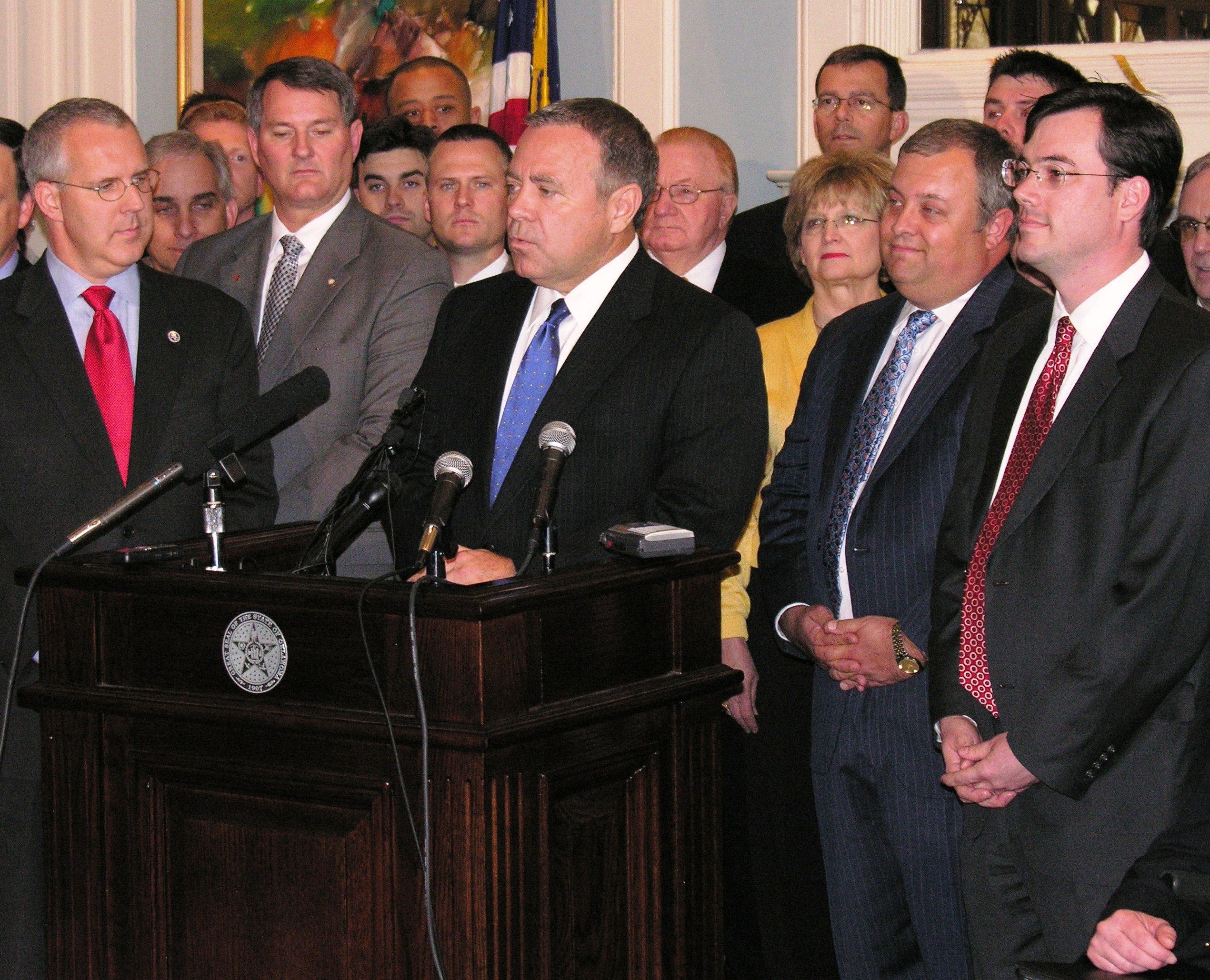 Senator Mike Morgan
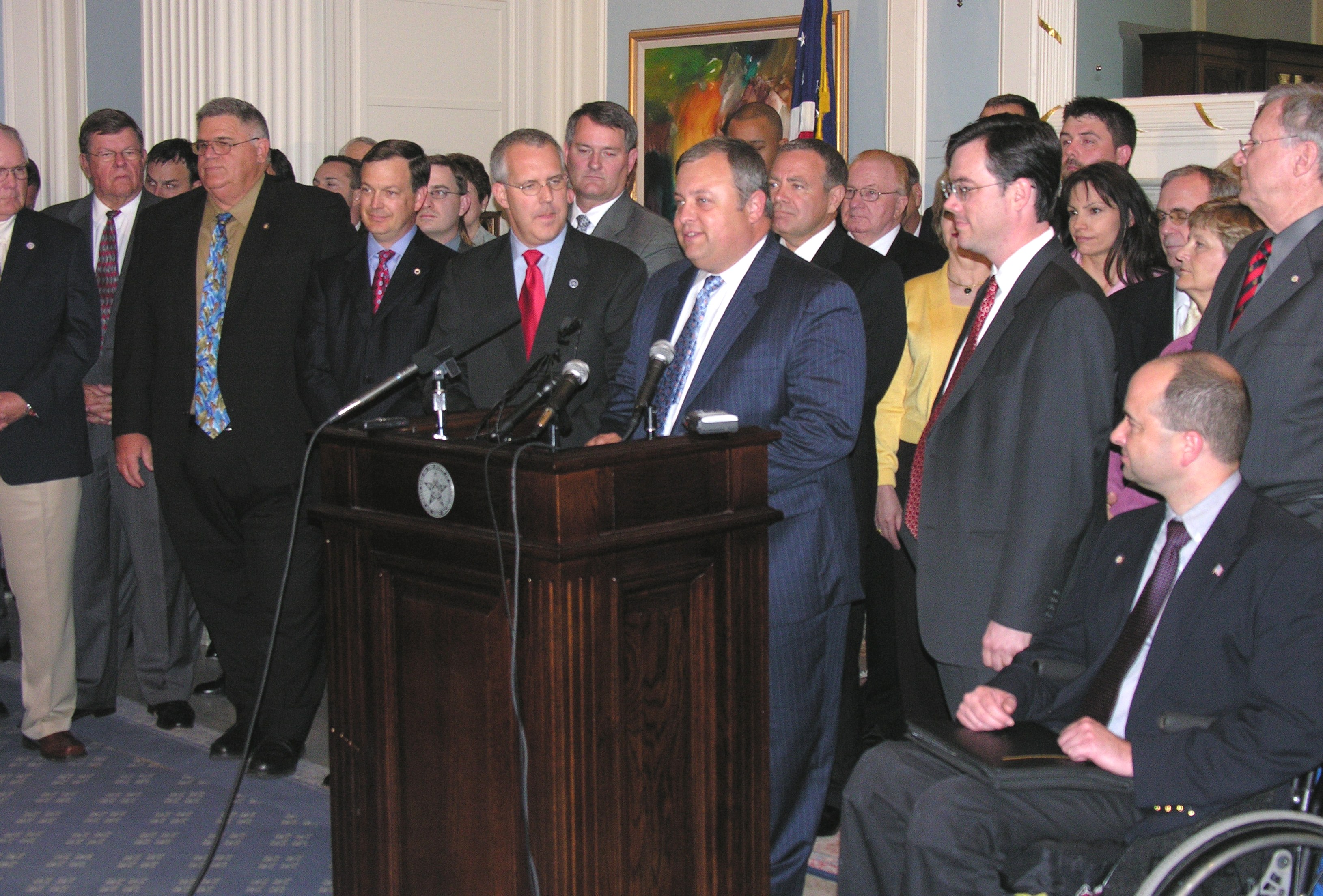 Senator Glenn Coffee
Governor, Legislative Leaders Announce State Budget Agreement
Senator Mike Morgan
Senator Glenn Coffee
One day after the enactment of a bipartisan tax relief package, legislative leaders and the governor on Tuesday announced the outlines of a $7.1 billion state budget agreement that speeds up tax cuts for working Oklahomans, boosts teacher pay and includes important funds for critical state services such as public safety and state prisons.
“This budget agreement is the result of hard work and bipartisan cooperation, and I thank legislative leaders of both parties for finding consensus on important issues. It hasn’t always been an easy process, but lawmakers ultimately came together to do significant things for Oklahoma, such as strengthening higher education, establishing a state bioenergy center and increasing teacher pay. This bipartisan budget addresses a number of other priorities, as well as ensuring tax relief. In all, it marks a win-win for Oklahoma,” stated Governor Brad Henry
“We said very early on that the hallmark of this legislative session would be fiscal restraint and restored accountability from government. This is the first time ever in the history of our state that a Legislature cut government spending when there was the opportunity to spend more,” said Speaker Lance Cargill, R-Harrah. “We delivered a responsible state budget that makes record investments in core services while putting in place reforms that make clear we expect in return quality performance and results. At the same time, we have achieved real tax relief for Oklahoma’s working families – the very people whose productivity has helped fuel our economic growth. Important reforms include taking a first step toward a merit-based pay system for Oklahoma teachers and motivating our OHLAP scholars to earn better grades while in college. And for the first time, we will take a major step toward fixing our state’s prison problem by conducting a top-to-bottom review of the Department of Corrections.”
“This budget agreement focuses on protecting middle class families and provides a fiscally-responsible framework for Oklahoma’s future by opening the door to educational opportunities for the next generation. It includes important funding to keep tuition increases to a minimum at our colleges and universities and establishes a permanent funding source to ensure the long-term stability of the Oklahoma’s Promise Scholarship Program,” said Senate President Pro Tempore Mike Morgan, D-Stillwater.
“This fiscally-responsible agreement builds on the bipartisan budget and tax relief plan passed by the Legislature earlier this session, and represents a common sense compromise that Oklahomans can all be proud of – especially the tax cuts for working families and the long-term fix for the Teacher Retirement System,” stated Senate Co-President Pro Tempore Glenn Coffee, R-Oklahoma City. “The Senate’s power-sharing agreement has resulted in a spirit of cooperation in the Legislature’s upper chamber, and this bipartisanship is evident in today’s agreement. The stage is now set for an orderly and on-time adjournment of the 2007 legislative session.”
“Great things happen when different sides work out different priorities,” said House Minority Leader Danny Morgan, D- Prague. “Our constituents sent us to the Capitol to adequately fund state agencies that meet the needs of all Oklahomans. This inclusive bi-partisan budget is truly a victory for this state.”
Highlights of the agreement include:
A four-point tax relief package to speed reduction of the state’s top marginal income tax rate, provide a childcare credit for stay-at-home parents, offer a back-to-school sales tax holiday and eliminate the franchise tax on most small businesses.
An average $1,000 per-teacher pay increase, weighted toward veteran teachers and those with advanced degrees. Funds in this area also include an incentive-based program to encourage the hiring of specially-qualified teachers.
$5 million to fund per diem increases at private prisons and halfway houses to ease state prison overcrowding.
$1 million to the Department of Public Safety to replace obsolete vehicles.
$3 million for drug courts and the “Smart on Crime Initiative.” Drug courts have been shown as one way to reduce prison overcrowding.
A permanent funding source for the Oklahoma Higher Learning Access Program (OHLAP) with new college GPA requirements for OHLAP scholarship students.
A tuition-lock program that allows incoming in-state Oklahoma college and university students to opt in to a guaranteed tuition rate for four years.
A $33 million increase for the State Regents for Higher Education to cover operational expenses.
An increase of the authorization for endowed chairs at Oklahoma colleges and universities from the current $50 million to $100 million.
A deposit of $10 million into the Oklahoma Teacher Retirement System as an initial down payment on a long-term historic reform to fund Oklahoma’s broken teacher retirement system that will pump more than $200 million into the system over the next five years.
$15 million for the Oklahoma Centennial Commission, as that entity completes celebrations, plans and projects for the 2007 State Centennial.
$10 million for a state Bioenergy Fund, using $4 million in existing appropriations from Oklahoma Center for Advancement of Science and Technology (OCAST).
$5 million in funds for Educare centers to match private funds from the George Kaiser Family Foundation.
$16.5 million for capital projects at the University of Oklahoma, Oklahoma State University and regional universities, including the state’s Cancer Center.
$2.5 million for rural fire department equipment costs and $1.4 million for firefighter training.
$6.5 million for the Conservation Commission to address critical needs for flood control structures across the state – leveraging state funds for 2-to-1 matching federal dollars.
$10 million for State Emergency Fund and costs from devastating ice storms earlier this year.
Contact info
Senator Morgan's Office: (405) 521-5605 Senator Coffee's Office: (405) 521-5654

