 Oklahoma Senate
Sen. Morgan says Oklahoma has always been tough on crime, but now it's time to be smart as well.
In order to provide equal access and equal opportunity to people with diverse abilities, this site has been designed with accessibility in mind. Click here to view
Share
back to press releases
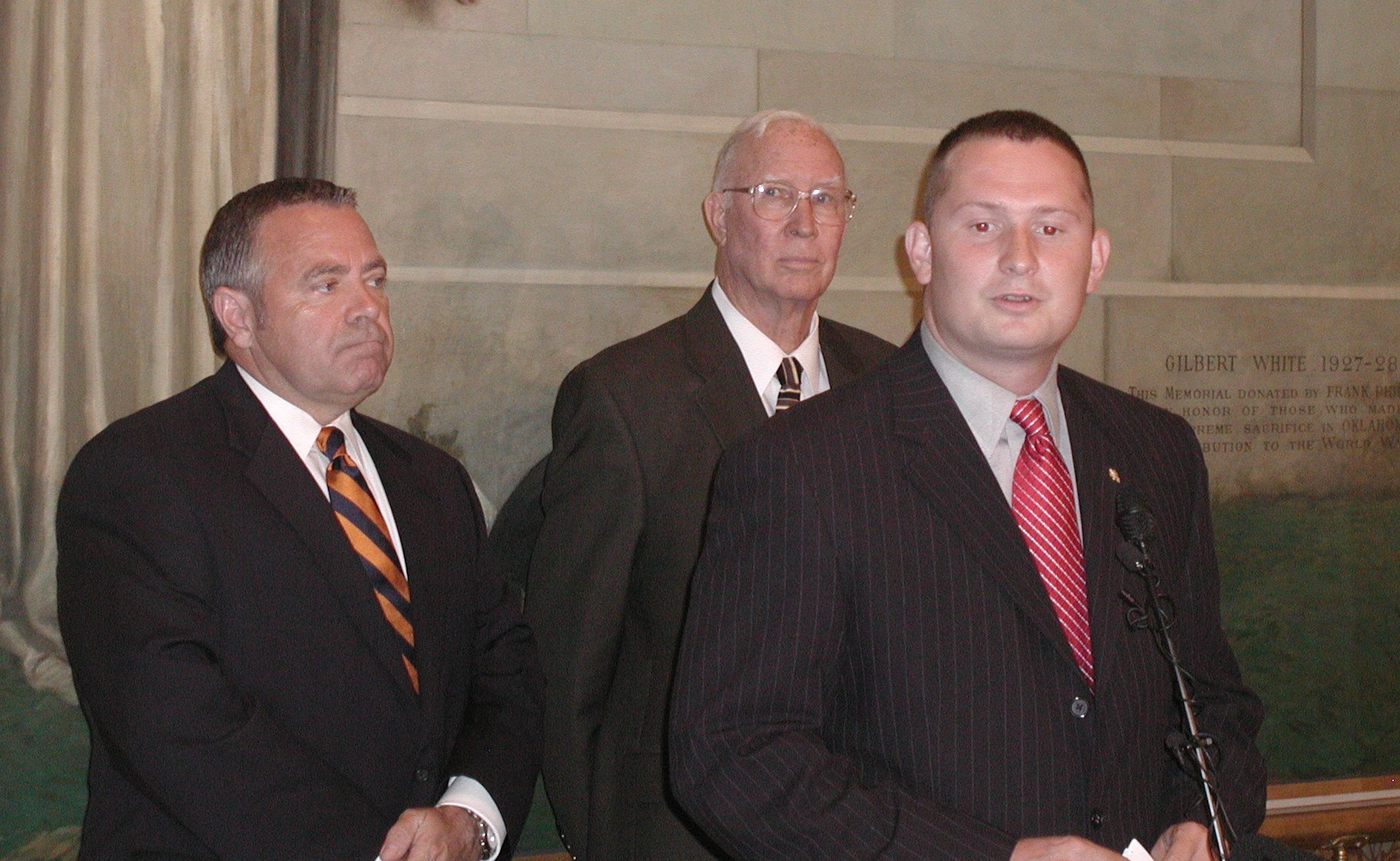 Senate President Pro Tem Mike Morgan & Sen. Gilmer Capps listen as Sen. Kenneth Corn presents the details of the Senate plan to fund the Department of Corrections.
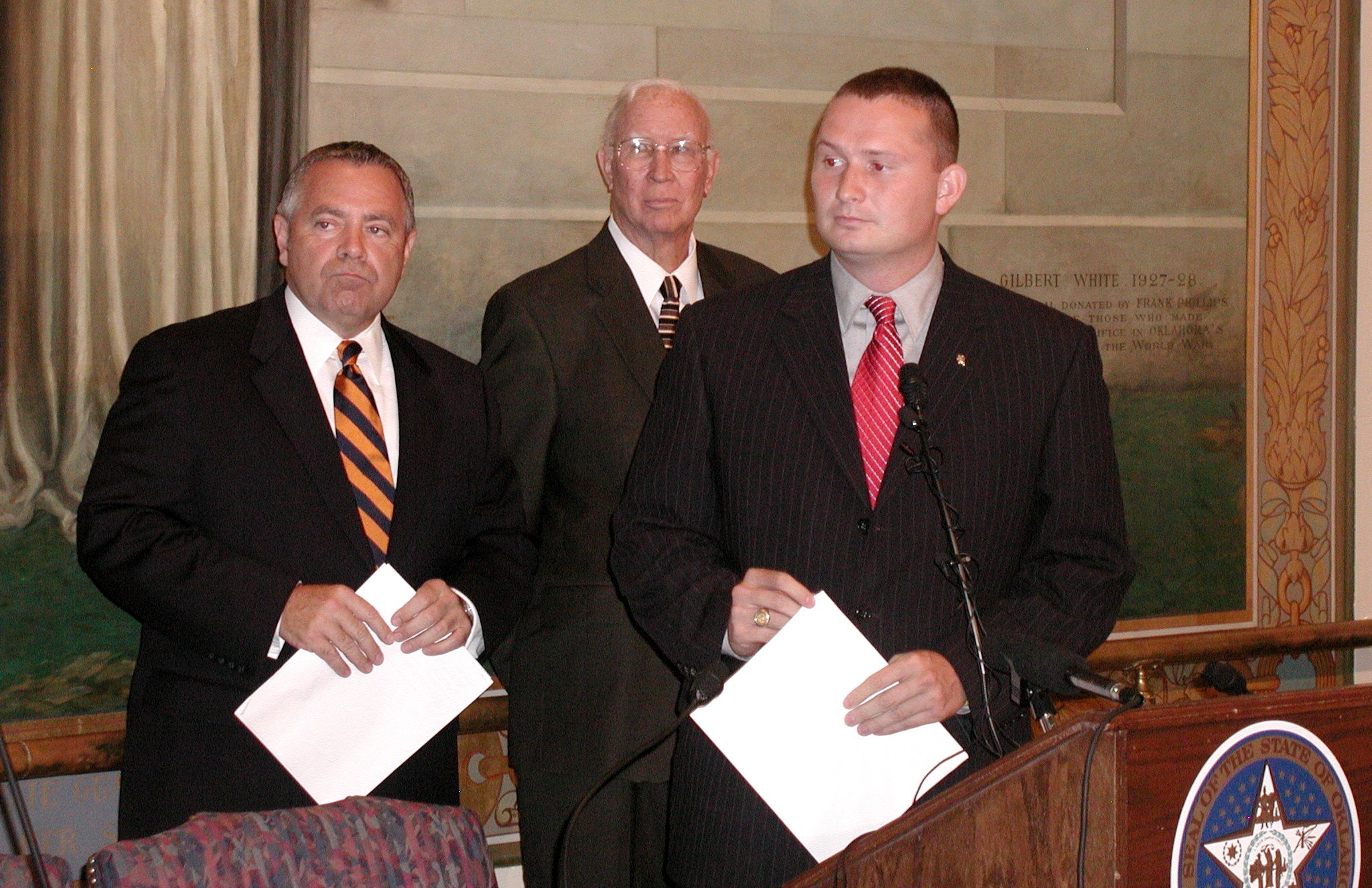 The legislators listen to questions from reporters.
Senate Unveils $10.6 Million Prison Funding Fix
Senate President Pro Tem Mike Morgan & Sen. Gilmer Capps listen as Sen. Kenneth Corn presents the details of the Senate plan to fund the Department of Corrections.
The legislators listen to questions from reporters.
Sen. Corn presents the details of the Senate plan to fix Correction's funding.
Q&A with Sens. Morgan, Corn & Capps
Morgan says corrections has been chronically underfunded, but the Senate's three-prong solution should have the problem fixed within the coming year.
Senate leaders Thursday unveiled a bold plan that will eventually put 450 additional corrections officers on the job in Oklahoma prisons and help ensure staffing levels don’t drop to dangerous levels in the future.
“This plan does more than just throw money at a chronic problem. It directs additional funding where it is needed most to protect Oklahoma families. It also includes systemic changes that will increase the efficiency of the Department of Corrections and help our state be both tough on crime and smart on crime in the future,” said Senator Kenneth Corn, chairman of the Senate Appropriations Sub-Committee on Public Safety and Judiciary and architect of the proposal.
Cost of the plan for Fiscal Year 2006 is $10.6 million. When implemented for a full fiscal year in FY 2007, the plan will cost $20.5 million
“Senator Corn has done a remarkable job of crafting a solution that addresses the immediate public safety crisis in our state and will create greater accountability and fiscal stability at the Department of Corrections in the future,” Senate President Mike Morgan said.
Morgan and Corn were joined for Thursday morning’s press conference by other members of the Senate Democratic Caucus.
The plan includes $3.2 million in FY 2006 funding needed to hire the first 150 additional corrections officers and 54 probation officers. Also included in the plan is $5.7 million for a pay hike that officials hope will help the Department of Corrections reduce turnover and recruit guards to fill the newly funded positions. Currently, entry level corrections officers make $20,600 a year. The Senate plan will increase that starting salary – with a corresponding pay boost for supervisors – to nearly $24,000.
“Being a correctional officer is a dangerous and often thankless job. We believe this salary increase is necessary to ensure that DOC can add the 150 prison guards as soon as possible to keep our communities safe,” Corn said.
The plan also requires DOC to maintain staffing levels at a set ratio of corrections officers to inmates in the future, meaning that the department will have to cut something besides prison guards to address any future funding shortfalls.
“The safety of our communities must be our top priority. If budget cuts become necessary in the future, we have to ensure that those cuts don’t endanger Oklahoma families,” Corn said.
Several aspects of the plan address the large portion of inmates who have been diagnosed with a mental illness – 72 percent of incarcerated women and 32 percent of the male prison population. The plan calls for centralizing mental health services within the Department of Corrections and creating two new programs to help mentally ill parolees re-enter the community at a cost of $570,000 for FY 2006.
A Discharge Planning Program will link mentally ill inmates – many of whom are likely to re-offend if they don’t continue to receive mental health services once they are paroled – with available services in the community and provide for them a plan of care for after they are released.
A pilot Intensive Care Coordination Program would provide specialized care for 90 mentally ill parolees once they are released.
The Senate plan also calls for expansion of Mental Health Courts, a separate court system that addresses offenders’ mental health conditions in the same way Drug Courts deal with defendants’ drug addiction. Cost is $580,000 in FY 2006.
Other aspects of the Senate plan include:
Creating three trial re-entry Drug Courts for inmates already in DOC custody who could be paroled into treatment programs with intensive supervision. (Courts will cost Department of Mental Health and Substance Abuse $500,000.)
Giving DOC, and not the courts, the authority to determine which inmates are in need of certain department programs, such as drug treatment;
Allowing District Attorneys and the Courts to impose intermediate sanctions for non-violent offenders found to be in technical violation of the conditions of their probation rather than automatically sending them back into the prison system;
Increasing the number of inmate work crews;
And creating of a task force to continue to study ways to make the department more efficient, including greater utilization of its farm and ranch land.
Corn pointed out that the plan does not give DOC a blank check.
“Addressing the staffing shortage was our immediate priority,” Corn said. “By acting now, in special session, DOC can have the new guards hired and on the job by December or January. Waiting until February to fund these additional positions would be tempting fate.”
“Violence in our prisons is escalating. We can’t wait until it stretches into our communities to act.”
Contact info
President Pro Tempore's Office - (405) 521-5605

