 Oklahoma Senate
Sen. Maddox explains new pilot program for a bachelor's degree in Applied Technology.
In order to provide equal access and equal opportunity to people with diverse abilities, this site has been designed with accessibility in mind. Click here to view
Share
back to press releases
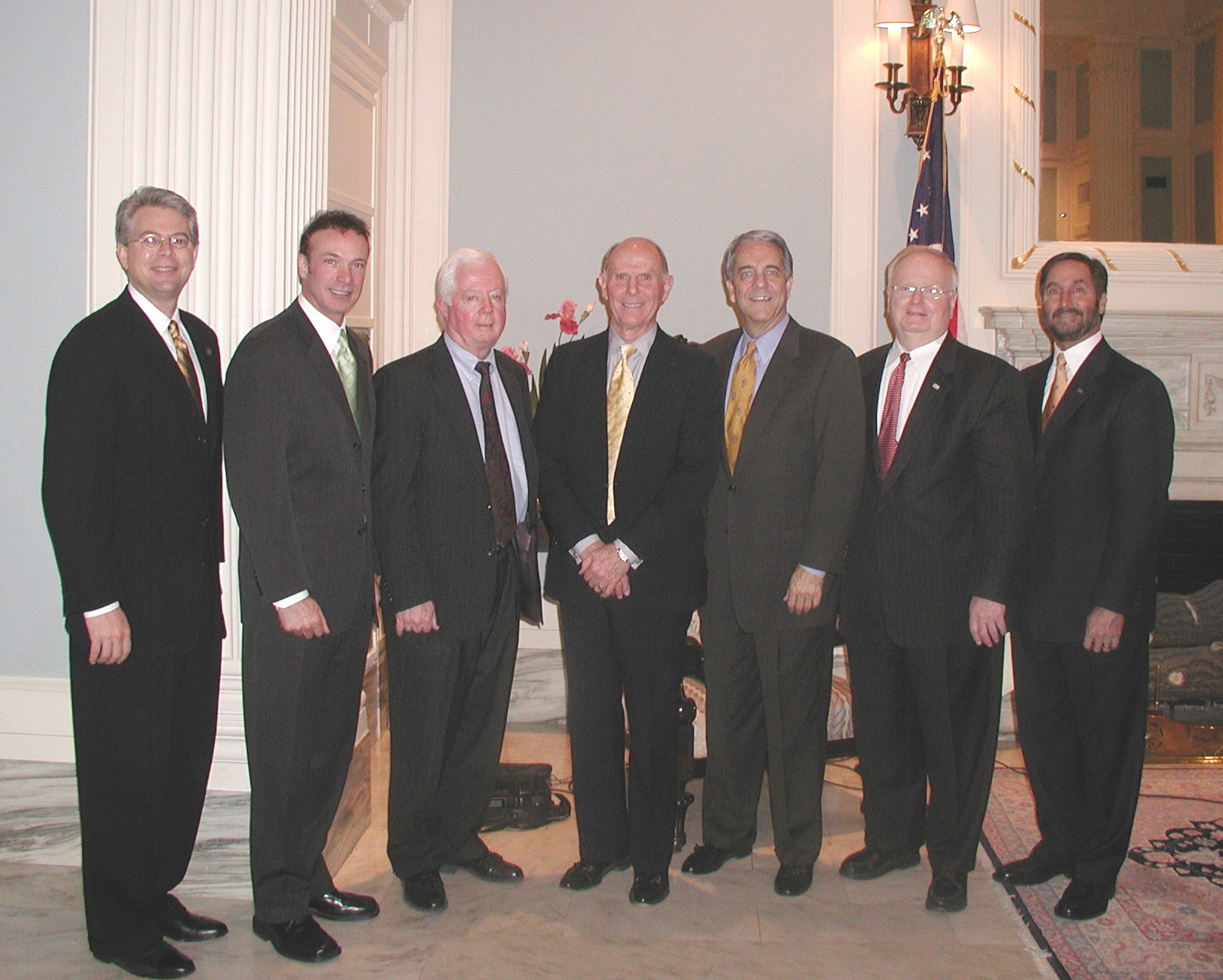
Pilot Program to Help More Oklahomans Earn Bachelor’s Degree
Sen. Hobson praises efforts of Sen. Maddox and higher education officials for making making this program a reality.
UCO President, Roger Web explains the purpose of the pilot program.
Officials from higher education, technology center schools, the private sector and the legislature unveiled a new pilot program they said would enable Oklahoma workers in technical professions to earn a bachelor’s degree.
State Senator Jim Maddox, D-Lawton, said that since 1988, career tech centers and Oklahoma colleges have had a cooperative agreement under which students could earn an Associates of Applied Science degree.
In 2002, Senator Maddox began a study to look at further cooperative agreements between higher education, career techs and businesses. That study resulted in a pilot program through the University of Central Oklahoma (UCO) that will enable those students to complete a Bachelor’s of Applied Technology degree.
“A lot of Oklahoma businesses would prefer to promote from within but many could not because those higher paying jobs required a bachelor’s degree. This agreement will make it easier for those in the technical professions to earn that degree and help keep Oklahomans in those higher paying jobs. It’s a win-win proposition for workers, higher education, career tech centers and for Oklahoma businesses,” said Maddox.
Maddox said earning a bachelor’s degree usually results in higher earnings for an individual. According to the U.S. Census Bureau, the median income for a high school graduate 25 years or older in 2002 was $25,081. For an individual with an associate’s degree it was $31, 358. That figure jumped to $41,361 for those with a bachelor’s degree.
The pilot program, recently approved by the Regents for Higher Education, will initially involve UCO, Rose State College, Oklahoma City Community College as well as Francis Tuttle, Metro Tech and Moore-Norman technology center schools.
“This agreement shows how, working together, our institutions of higher education, career techs and businesses can find a solution that benefits those entities, as well as Oklahomans who want to provide a better life for their families,” said Senate President Pro Tempore Cal Hobson.
Dr. W. Roger Webb, President of UCO, said the three schools have had a long history of producing quality results for students in the Oklahoma City metropolitan area.
“This innovative degree process, developed as a team, will reduce college costs to Oklahoma by eliminating the need to take duplicate courses, will meet the specific needs described to us by knowledge-based businesses, and will increase the number of Oklahomans holding a bachelor’s degree. We are proud to be part of this effort and look forward to enrolling the hundreds of new students seeking to improve their lives through higher education,” said Dr. Webb.
“This will provide employees in technical professions an opportunity to gain advanced skills and knowledge and earn a bachelor’s degree. Having a more highly educated workforce is essential to economic growth. This program provides one more avenue to ensure a positive future for Oklahoma,” said Dr. Bob Todd, President of Oklahoma City Community College.
“This is very exciting—something we’ve been promoting for a while. This degree meets a specific need in the workforce. We applaud the efforts of UCO to recognize and respond to that need,” said Dr. Jim Cook, President of Rose State College.
Individuals with an Associate’s of Applied Science degree working in professions such as allied health, information technology, graphics communications as well as other technical areas would be among those who could now earn a Bachelor’s of Applied Technology degree through UCO.
Dr. Tom Thomas, Associate Superintendent of Great Plains Technology Center in Lawton, said the Associate’s Degree in Applied Science has been very beneficial to area workers and businesses alike. Thomas said he looked forward to seeing the model spread from the initial pilot site to institutions throughout the state.
“On behalf of our corporate training clients, I am very pleased that the Regents have approved a model degree program to allow technically-trained employees a direct path from the training they receive at technology centers to higher education institutions. As our corporate partners strive to promote their technical personnel into management positions, this model should prove to be very valuable to them,” said Thomas.
Students can begin work on the new Bachelor’s of Applied Technology degree at UCO beginning in the 2004 fall semester.
Contact info
Senate Communications Division- (405) 521-5774

